Lastinger Learning
 New Worlds Reading
 Florida Tutoring Advantage
2023 Math Listening Tour
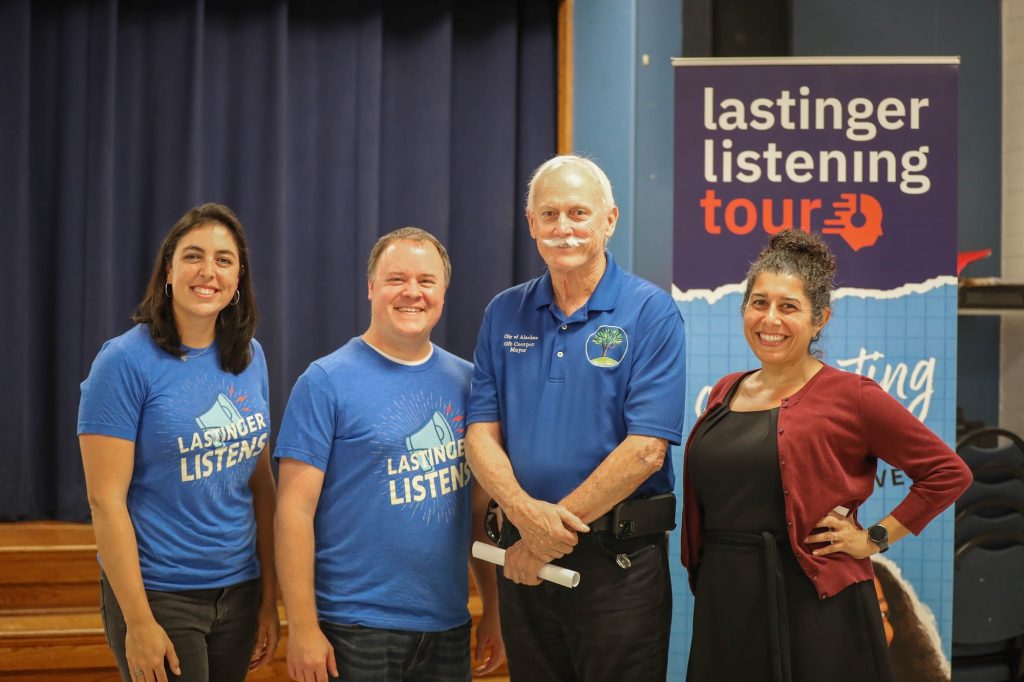
Over the course of 10 weeks in the fall of 2023, the UF Lastinger Center Listening Tour team traveled from Pensacola to Key West to listen to students, educators, leaders and policymakers and gather their perspectives on mathematics education in Florida.
Findings & Recommendations
Key community stakeholders convened with the Lastinger Center’s math team to share the most prominent pain points that mathematics teachers, students, families and schools face in and out of the classroom.
Through interviews, surveys, round-table discussions, meetings and other convenings, the Listening Tour team gathered robust data about these challenges and set to work synthesizing common themes and struggles from educators all over the state and serving all types of communities.
At the 2024 Listening Tour Math Summit, the Lastinger Center Mathematics Team unveiled the Listening Tour Briefs and the Landscape Analysis. Covering five key areas, these briefs take a deep dive into specific key findings and recommendations from the Listening Tour. Participants then discussed further actions to take in the pursuit of changing the education landscape, engaged participants in hands-on mathematics practice, and provided ideas and resources for educators to use in their day-to-day work.
Listening Tour Briefs
Brief 1
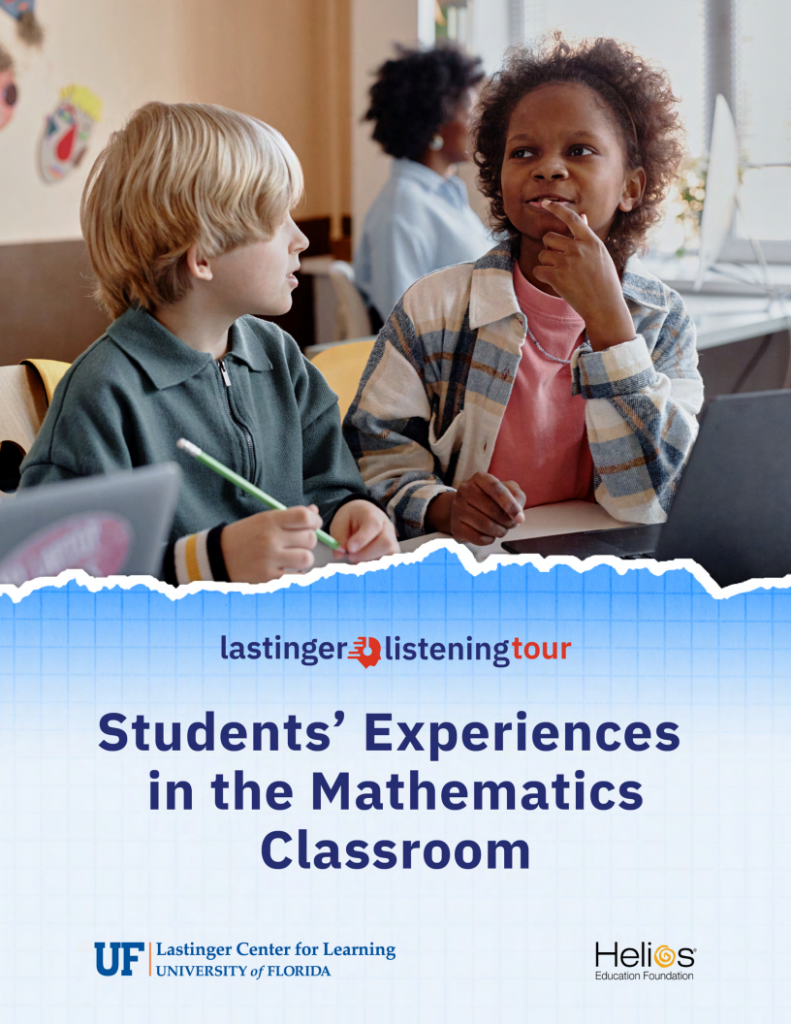
Students’ Experiences in the Mathematics Classroom
Key Findings
As students grow through the grade levels, their interest in math declines, citing unengaging and uninteresting learning activities to be one of the main reasons. Teachers and coaches alike are requesting more professional learning opportunities that focus on the delivery of instruction in the classroom.
Question
How can we prevent this drop in student interest?
Recommendations
Develop and then engage students in collaborative and meaningful math experiences.
Brief 2
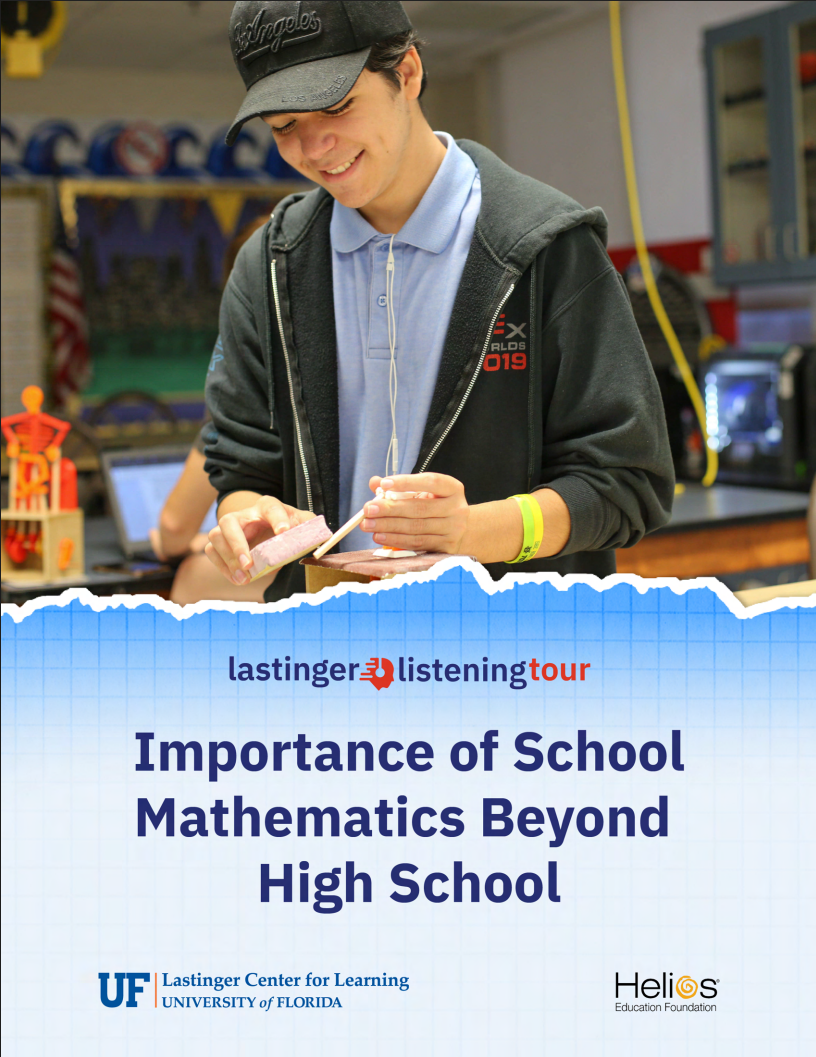
Importance of School Mathematics Beyond High School
Key Findings
Of the Florida business leaders and employers surveyed, almost all cited mathematics skills—both concrete and abstract problem-solving—to be important in the workforce. They also cited a need for more high-quality math instructors with better pay and training to properly prepare students for the workforce.
Question
How can we develop mathematics education to facilitate students’ transition from high school to the workforce?
Recommendations
Leverage school-industry partnerships, invest in comprehensive teacher support, and invest in family mathematics resources.
Brief 3
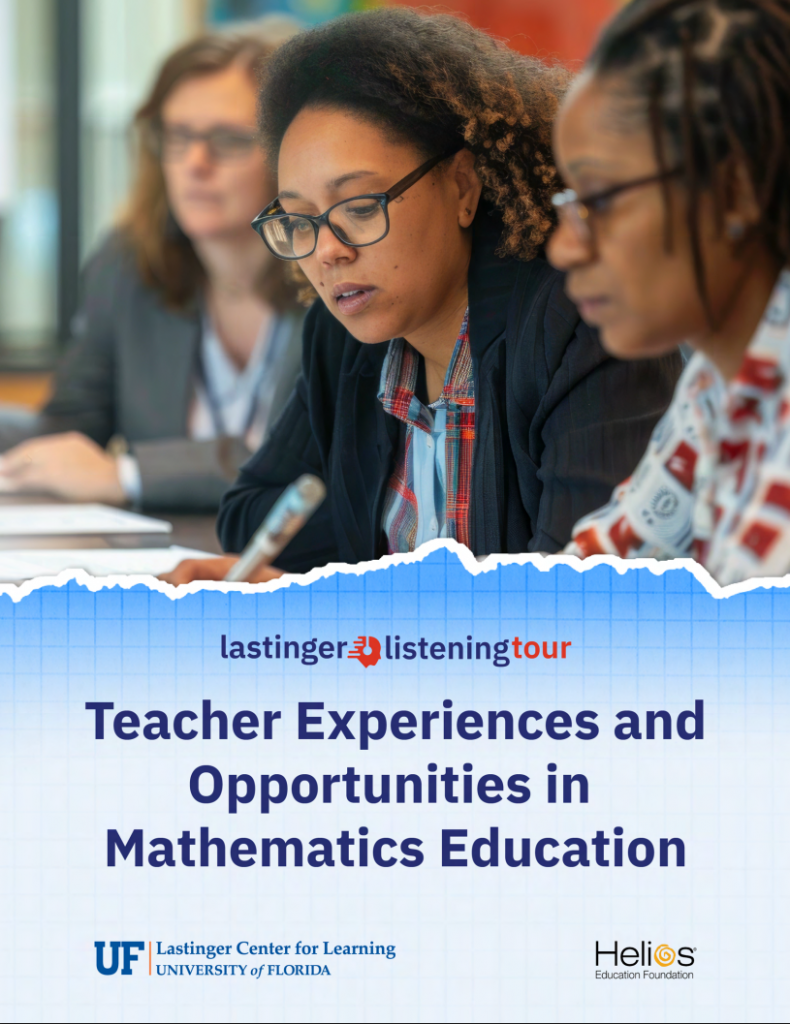
Teacher Experiences and Opportunities in Mathematics Education
Key Findings
Mathematics educators across Florida share similar visions of the ideal math teaching environment, one full of engaging and collaborative exercises and abundant student support. However, they list several barriers (such as lack of time, resources, support staff, training, and funding) that prevent this ideal environment from becoming a reality.
Question
How can the Florida education system support mathematics teachers in creating this ideal classroom?
Recommendations
Offer math-specific professional learning, provide access to high-quality instructional materials, protect teacher planning and instructional time, and position teachers as professionals.
Brief 4
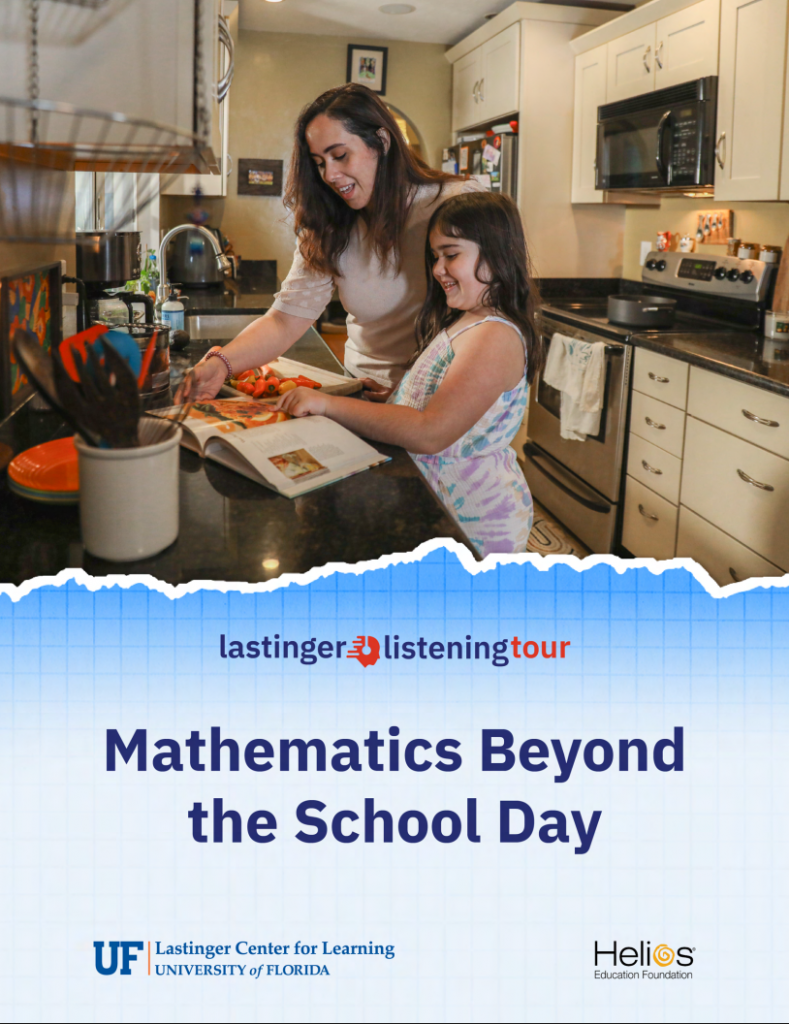
Mathematics Beyond the School Day
Key Findings
Parents in Florida reported being uncomfortable with mathematics education, whether that be properly practicing math with their students or approaching their students’ math teachers about the curriculum. Teachers, coaches, and administrators are feeling this lack of connection as well as they reported a lack of emphasis on parent involvement and support in their districts.
Question
How can we get parents more confident and more involved in their students’ mathematics readiness?
Recommendations
School-offered community mathematics events, at-home resources like flyers or take-home math kits, and after-school tutoring programs to support families beyond the school day.
Brief 5
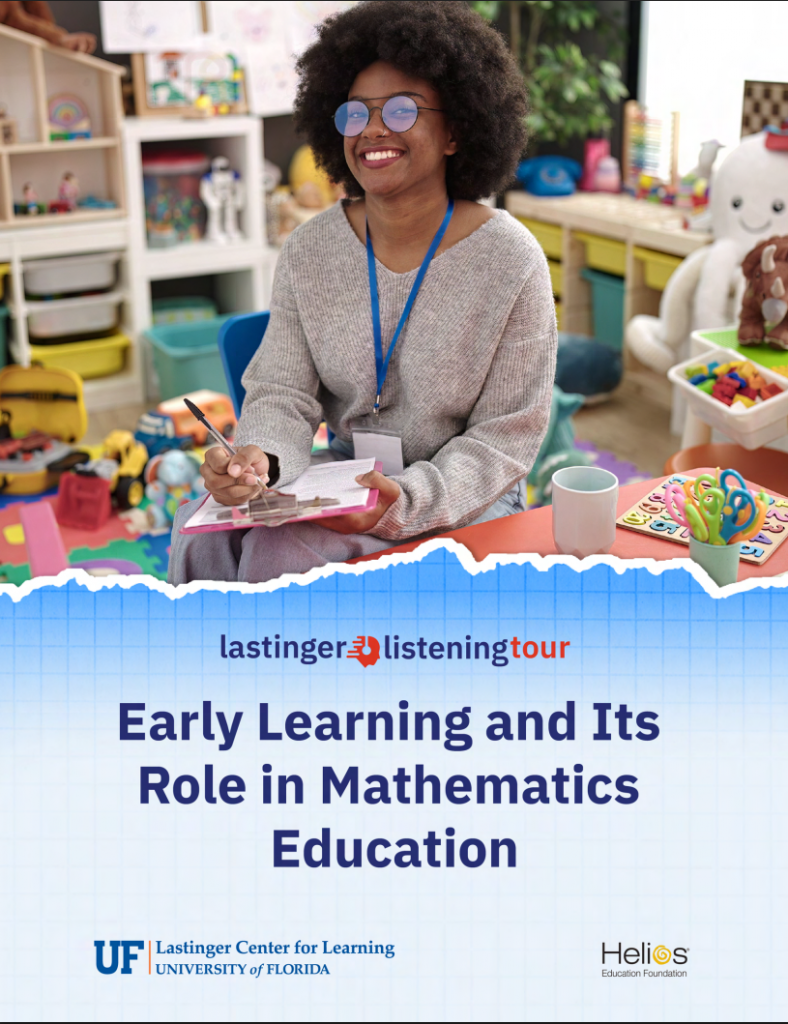
Early Learning and its Role in Mathematics Education
Key Findings
Our early learning educators and education centers are not afforded sufficient opportunities to improve their mathematics instruction methods. Whether it be lack of funding, lack of resources, or lack of time, early learning mathematics education is in need of support.
Question
How can we ensure our early learning educators are properly equipped to teach math to the next generation?
Recommendations
Dedicate funding to early learning providers and to position them as professionals in the education industry.